Cross-Platform Apps
React Native and Flutter builds sharing one codebase across iOS and Android, cutting build and maintenance cost substantially.
iOS, Android and cross-platform apps built to ship, scale and survive their first ten thousand users.
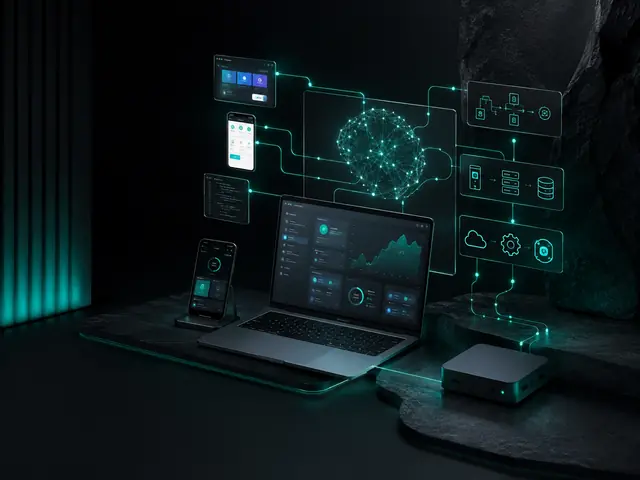
An app is the most expensive way to solve a problem a website could have solved. So the first thing we do is establish whether you actually need one, and if you do, exactly which two or three jobs it has to do brilliantly.
From there we build. React Native and Flutter for most projects, native Swift or Kotlin where hardware access or performance genuinely demands it, backed by a properly designed API and infrastructure that will not collapse the week you get featured.
We take apps through App Store and Play Store review, and we stay on afterwards, because the first six weeks post-launch is when you learn what the product really needed.
A paid discovery phase producing a scoped roadmap you own outright.
Data model, integrations and infrastructure agreed before code.
Fortnightly demos, working software, no black box.
Your repositories, your infrastructure, documented.
React Native and Flutter builds sharing one codebase across iOS and Android, cutting build and maintenance cost substantially.
Swift and Kotlin development where you need deep hardware access, offline reliability or maximum performance.
Scalable APIs, authentication, real-time sync and push infrastructure, the part that determines whether the app holds up under load.
Interface design built to platform conventions, prototyped and tested before a line of production code is written.
App Store and Play Store submission, review handling, and app store optimisation so the app is findable once it is live.
OS version updates, crash monitoring, performance work and feature iteration driven by real usage analytics.
Kerala is an Android market. We design for mid-range Android on patchy networks and ship iOS from the same codebase where the audience needs it.
Apps that work in a lift, a godown or a Wayanad estate and sync when the network returns.
Razorpay, PhonePe, Cashfree and UPI intent flows, with subscriptions and mandates where the model needs them.
Localised screens with Malayalam typography that renders properly, and a switch that remembers the choice.
Notifications through the channel the user actually reads, with consent handled under the DPDP Act.
Google Play and App Store policy, privacy labels and review handled as part of delivery.
Events, funnels and crash reporting configured before launch so the first release teaches you something.
Source, store accounts, signing keys and documentation in your name.
| Engagement | Timeline |
|---|---|
| Discovery and prototype | 2 to 3 weeks |
| MVP app, Android and iOS | 8 to 12 weeks |
| Customer app with backend | 12 to 20 weeks |
| Field or workforce app | 6 to 12 weeks |
| Ongoing product team | Monthly |
| Support and store maintenance | Monthly |
Loyalty, ordering, booking and account apps for chains and brands with a Kerala customer base.
Appointment, report and follow-up apps for hospital groups, with health data handled carefully.
Delivery, inspection, sales and attendance apps that work offline for teams across the state.
Parent and student apps for schools and colleges, with fees, attendance and communication in one place.
Product builds for Infopark and KSUM-backed companies that need a senior mobile team without hiring one.
Discovery produces a specification and a fixed price for a defined release.
A named team shipping releases on your roadmap month to month.
Store maintenance, OS updates, monitoring and improvements for apps we built or inherited.
The Kerala app user is on a mid-range Android phone with limited storage, on a network that drops in lifts and estates, and with dozens of apps competing for the same home screen. An app designed on the latest iPhone in an office with fibre is designed for a user who does not exist here.
We design and test on the devices and networks the audience uses: small download size, fast cold start, graceful behaviour offline, and screens that work in Malayalam without breaking the layout. That discipline is the difference between an app that gets used and one that gets uninstalled to make room for something else.
Real mid-range Android devices on real Kerala networks, not just emulators.
Download size and cold start treated as features.
Local storage and sync so the app works when the network does not.
Screens tested with Malayalam strings, which run longer than English.
Most Kochi apps are best built cross-platform in React Native or Flutter: one codebase, Android and iOS, faster releases and lower cost. Some are not: apps that depend on hardware, heavy media processing or platform-specific features may justify native. We decide in discovery on the requirements rather than on a preference.
Either way the backend is built on the same engineering practice as our software projects, with APIs documented, hosting in Indian regions and integration with the systems the business already runs.
React Native or Flutter for the majority of business and consumer apps.
Kotlin and Swift where hardware or performance demands it.
Node.js or Python services documented and hosted in Indian regions.
Connected to your CRM, ERP, payment and messaging systems.
Shipping to the stores is a process with its own failure modes: policy rejections, privacy label mistakes, signing key mishaps and reviews that stall for weeks. We handle store setup, compliance and submission as part of delivery, and we keep the accounts and keys in your name.
After launch, analytics and crash reporting tell us what to fix first, and a maintenance plan covers OS updates, store policy changes and the improvements that the first real users reveal.
Play and App Store accounts, policies, privacy labels and submission handled.
Events, funnels and stability monitored from the first release.
Kept current as Android, iOS and store rules change.
Releases planned from real usage data.
An app is the visible tenth of a system. Behind it sit APIs, a database, authentication, notifications, payment reconciliation, an admin panel and the integrations with whatever the business already runs. Apps that fail after launch usually fail there: a backend that cannot handle Onam traffic, an admin panel nobody built, or an integration with billing that was left for later.
We build the backend with the same engineering practice as our business systems: documented APIs, Indian cloud hosting, monitoring, backups and an admin panel the operations team can actually use.
So the app, the admin panel and future integrations share one contract.
The operations screens that make the app runnable day to day.
Sized for peak, monitored, backed up, in Indian regions.
Connected to CRM, billing, inventory and WhatsApp.
A significant part of our app work is for clients in the UAE and UK, delivered from Kochi. The economics are compelling, but the reason engagements last is time-zone overlap and the fact that a Kochi team can be in Dubai the same day when a project needs it.
For Kerala businesses, logistics operators, clinics, retail chains, education providers. We build the apps that replace phone-call coordination with something their customers can self-serve.
Apps with payments, real-time features, multi-role access or heavy integrations run higher. We scope MVP first deliberately. It gets a real product in front of real users before the full budget is committed.
React Native or Flutter for the large majority of business apps: one codebase, roughly 30 to 40 percent lower build cost, and performance that is indistinguishable for typical use. Go native when you need heavy camera or sensor work, complex offline sync, or graphics-intensive rendering.
A cross-platform MVP is usually 10 to 16 weeks including design, development, testing and store submission. Store review adds a few days to a couple of weeks depending on the platform and the category.
Yes. We manage developer account setup, store listings, screenshots, privacy declarations, review responses and the release process. Apple rejections are routine and we handle the resubmission cycle.
Yes, and we usually should. An app is only as reliable as the API behind it. We build the backend, database and cloud infrastructure as part of the same engagement so there is no seam between the two.
Often yes, at least first. Kerala is predominantly Android, and a cross-platform codebase lets you add iOS later at low cost when the audience justifies it. We look at your customer data before recommending.
Yes. Offline-first design with local storage and sync is standard for field, delivery and workforce apps, and available for customer apps where it matters.
Yes. Store accounts, policy compliance, privacy labels, signing and submission are part of delivery, with accounts and keys in your name.
You do. Source code, store accounts, signing keys, backend and documentation are handed over in your name.
Every engagement is scoped individually after a discovery session, from the outcome you need and the work involved, and quoted before anything starts. Ad spend, where it applies, is separate and paid directly to the platforms, and we will say plainly if the budget on the table is too small to produce a usable result.
An MVP takes 8 to 12 weeks. A customer app with backend takes 12 to 20 weeks. Store review adds a week or two at the end, which we plan for.
Tell us what you are trying to grow and we will tell you honestly whether we are the right people for it.
3rd Floor, Oberon Mall, Padivattom, Edappally, Kochi, Kerala 682024